PM Surya Ghar 2.0 is not a notified government scheme as of September 2026. It is a set of proposals the Ministry of New and Renewable Energy (MNRE) is reportedly examining for the next phase of India's rooftop solar subsidy programme. The existing PM Surya Ghar: Muft Bijli Yojana remains fully active, with its central subsidy still capped at ₹78,000 for a 3 kW system. If the proposed changes go through, PM Surya Ghar 2.0 would reportedly tie subsidies to actual power generation instead of installed capacity, add a dedicated incentive for battery energy storage, and extend eligibility to apartment residents through shared and virtual net metering.
PM Surya Ghar 2.0 is the informal name for this proposed redesign. No formal notification has been issued, so homeowners and businesses should treat any battery storage subsidy under it as unconfirmed until MNRE publishes official guidelines.
Why the Government Is Planning PM Surya Ghar 2.0
The original scheme pays a flat subsidy based on system size, regardless of how much electricity a household actually generates. That design rewards installation over performance, and it leaves out apartment residents who have no private rooftop to install on.
Officials are reportedly weighing changes that reward systems for producing power over time, not just for passing commissioning. Gujarat households and businesses that plan their PM Surya Ghar application support through a GEDA-empanelled contractor would likely benefit, since the proposed model rewards durable, well-maintained systems over one-time subsidy capture.
Current PM Surya Ghar Subsidy Structure
The central subsidy under PM Surya Ghar scales with system size: ₹30,000 for 1 kW, ₹60,000 for 2 kW, and ₹78,000 for systems of 3 kW or higher, according to the government subsidy breakdown (July 2026). Battery storage sits outside this calculation entirely - a household that adds a battery still receives the same subsidy as one that doesn't.
Because of this cap, a typical 3 kW rooftop system costs between ₹1.5 lakh and ₹2 lakh before subsidy, so out-of-pocket costs still run into six figures even after the maximum benefit. Engineers at Raycal Power see this gap most often with clients who assume battery backup is already included in the subsidy.
| 👀 Did You Know? PM Surya Ghar's ₹78,000 cap applies only to solar capacity. A homeowner who adds a battery today pays for it entirely out of pocket - the subsidy amount does not change either way. |
|---|
What's Changing for Battery Storage Subsidies?
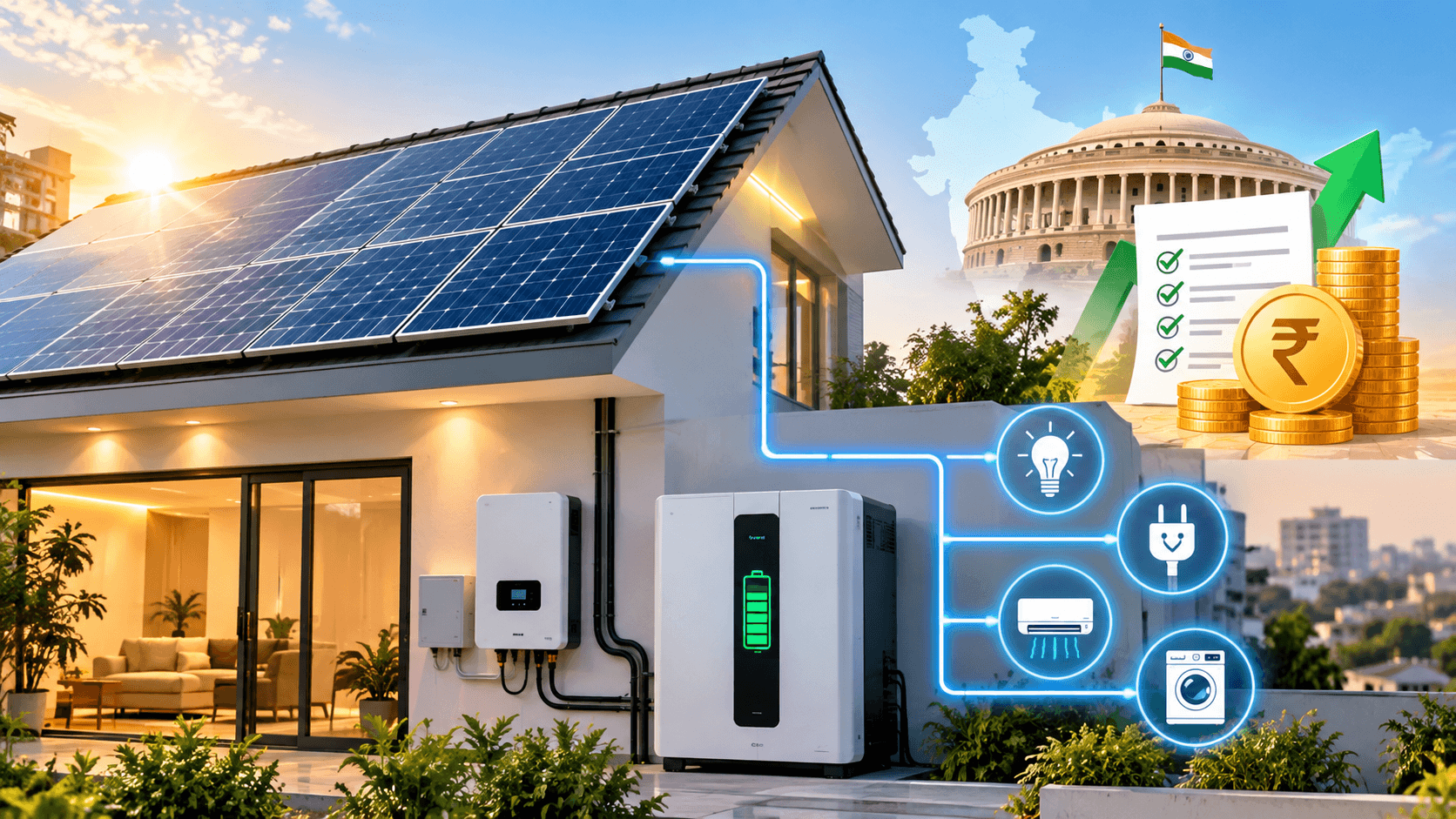
Battery storage is one of the most discussed elements of PM Surya Ghar 2.0. Officials are reportedly considering a dedicated incentive for battery energy storage at both the household and community level, aimed at cutting grid dependence during non-solar hours (July 2026).
This would mark a real shift: battery storage is currently permitted under the scheme but isn't separately subsidised, and the payout stays capped at 3 kW of solar capacity whether or not a battery is added. Businesses evaluating battery storage integration services alongside a rooftop project should plan around current, unsubsidised battery pricing until MNRE confirms otherwise.
Will Subsidies Move From Installed Capacity to Actual Generation?
Reports suggest MNRE is also weighing a shift from paying subsidies against installed capacity to paying them, at least partly, against metered generation over 12 to 24 months. The goal is to reward systems that keep producing electricity, not just systems that pass commissioning and go unmonitored afterward.
This generation-linked design has not been finalised, and no draft guidelines have been published as of September 2026. So, anyone comparing quotes should treat generation-based payouts as a future possibility, not a number to budget around.
A Digital Solar Passport Is Also Under Discussion
Alongside the subsidy changes, MNRE is reportedly exploring a common data protocol, informally called a Digital Solar Passport, to track a system's generation output, service history, and warranty status over its working life. For a homeowner, that would mean a portable, verifiable performance record useful at resale or during a warranty claim, though the feature has not moved past the discussion stage.
| ⚠️ Watch Out Some vendors already promote "PM Surya Ghar 2.0 battery subsidies" in sales pitches. No such subsidy has been notified, and quoting one as confirmed savings could leave a project's economics short. |
|---|
Can Apartment Residents Benefit From PM Surya Ghar 2.0?
The current scheme largely excludes apartment residents, tenants, and anyone without a private, suitable rooftop. PM Surya Ghar 2.0 discussions reportedly include shared community solar plants, balcony solar units, and virtual net metering, so eligibility would no longer depend on individual roof ownership.
For housing societies, this would mean allocating the output and savings of one shared installation across multiple flats instead of requiring each unit to install its own system. Readers comparing options can review our Gujarat solar subsidy guide for what's confirmed and available today.
What Would This Mean for BESS Project Economics?
Adding battery storage to a rooftop system improves energy security during outages and evening peak hours, but it's expected to raise upfront costs and extend the payback period, according to industry reporting on the proposal (September 2026).
The Raycal Power engineering team models battery-plus-solar economics on current, unsubsidised battery pricing, because any future incentive has no confirmed timeline. That keeps a project's return-on-investment estimate realistic regardless of what PM Surya Ghar 2.0 eventually includes.
| 🛠 Practitioner's Note "We size battery backup on today's numbers, not on a subsidy that might arrive next year," says the Raycal Power engineering team. "A client who needs backup power now shouldn't delay a decision for an incentive with no notified date." |
|---|
Should You Wait for PM Surya Ghar 2.0 Before Installing Solar?
For most households and businesses, waiting isn't the better option. The current PM Surya Ghar scheme is fully operational, with defined subsidy slabs, a working application portal, and no confirmed rollout date for any replacement.
"Waiting for an unconfirmed subsidy on a scheme that's already working rarely pays off," says the Raycal Power engineering team. "Every month a suitable rooftop sits idle is a month of savings not banked."
Businesses can review current rooftop solar payback timelines to see how quickly an installation under the existing scheme typically recovers its cost, independent of whatever PM Surya Ghar 2.0 eventually becomes.
Frequently Asked Questions
Is PM Surya Ghar 2.0 an official government scheme?
No. As of September 2026, it is a set of proposals reportedly under review at MNRE. No official notification has been issued, so applicants should keep applying under the current scheme.
What is the current PM Surya Ghar subsidy amount?
The central subsidy tops out at ₹78,000 for a 3 kW or larger residential system, with smaller amounts for 1 kW and 2 kW installations. This has not changed since the scheme launched in February 2024.
How much does adding battery storage cost right now?
Battery storage roughly doubles the cost of a comparable rooftop-only system, since it currently receives no subsidy support under PM Surya Ghar. Pricing depends on battery capacity, chemistry, inverter compatibility, and whether the installation is retrofitted onto an existing rooftop system or planned in from the start.
What is a Digital Solar Passport?
It's a proposed digital record that would track a solar system's generation output, service history, and warranty status over its lifetime. The idea is reportedly part of the PM Surya Ghar 2.0 discussions, alongside generation-linked subsidies, but it hasn't moved past the discussion stage at MNRE.
Does Gujarat offer solar subsidies beyond PM Surya Ghar?
Yes. Gujarat households and businesses can also access GEDA-administered state incentives and net metering support alongside the central PM Surya Ghar subsidy, depending on consumer category, sanctioned load, and system size at the time of application.
When will PM Surya Ghar 2.0 be officially notified?
No confirmed timeline exists as of September 2026. MNRE hasn't published draft guidelines, so any date circulating online should be treated as speculation until the ministry issues a formal notification.