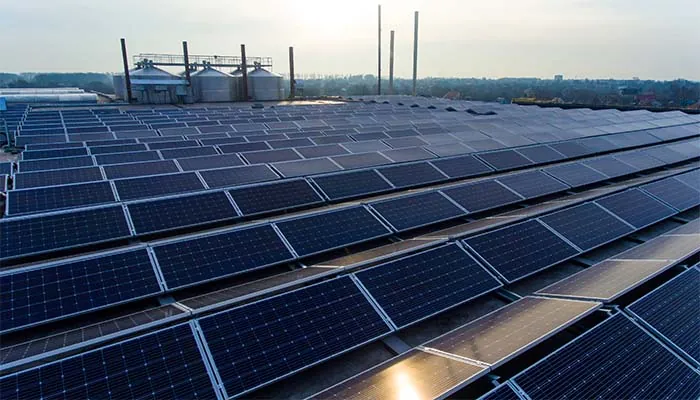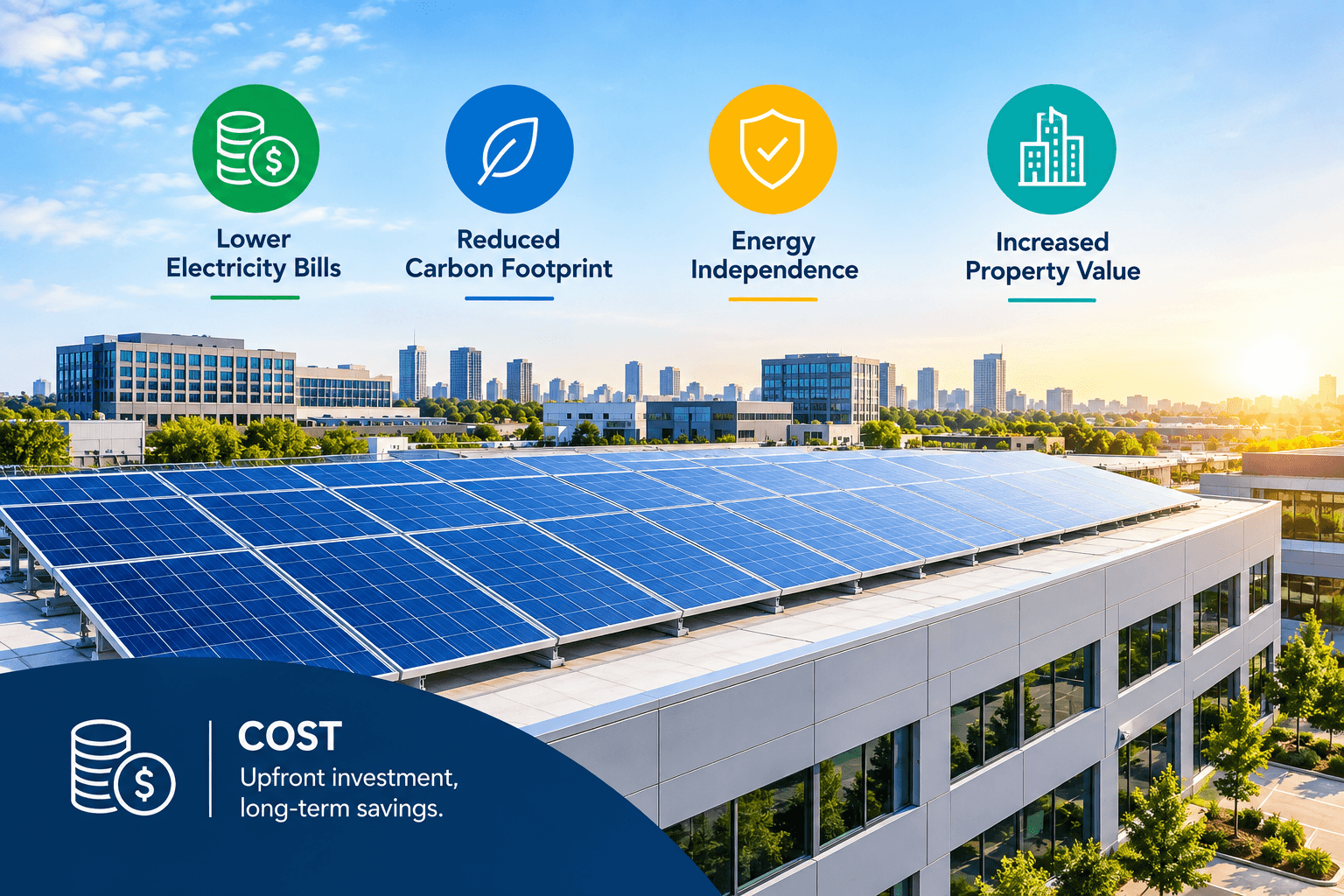
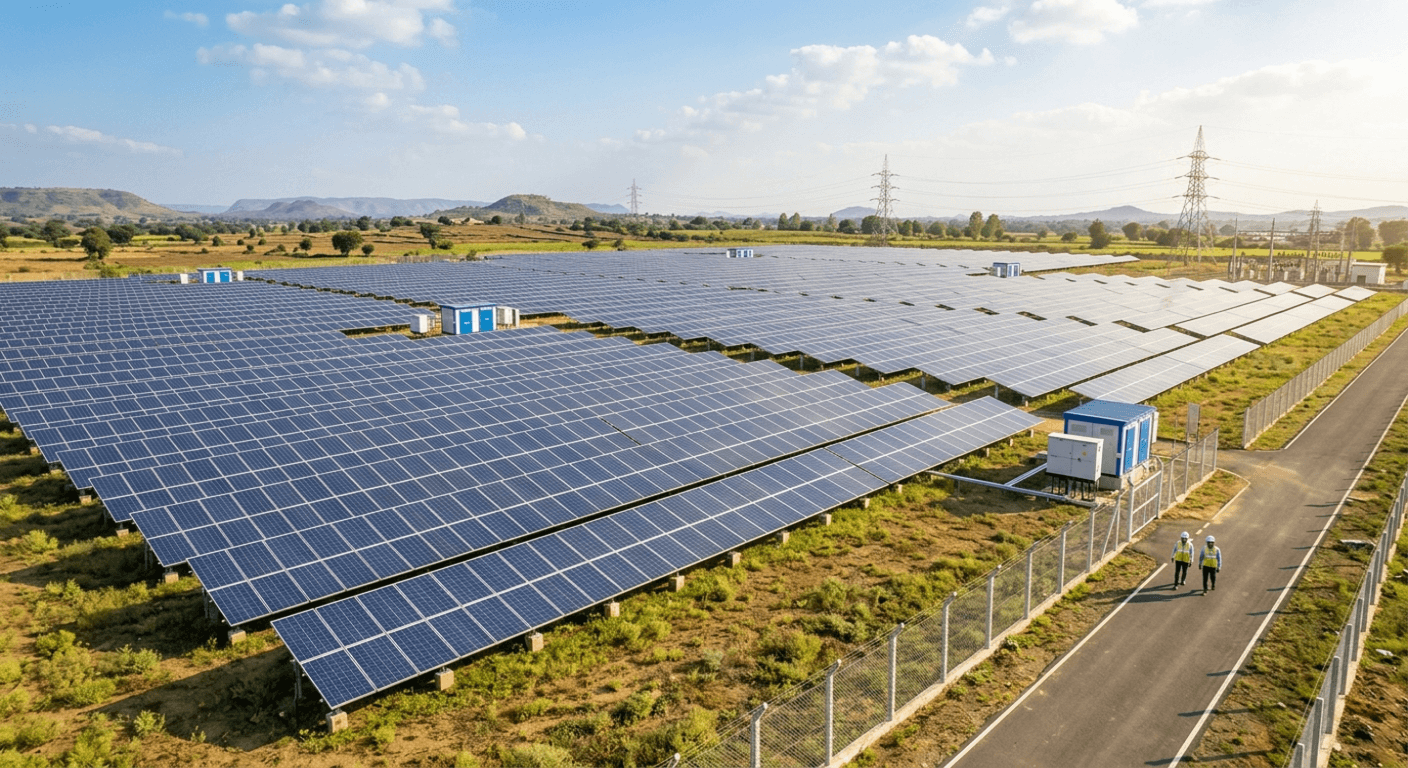
A 1 MW solar power plant in India costs ₹3.5 to ₹4.5 crore in 2026, or roughly ₹35 to ₹40 per watt on a turnkey basis. The plant needs 4 to 5 acres of open land if ground-mounted, or a large industrial roof if space allows. It generates 14 to 17 lakh units of electricity a year, depending on location and panel technology. For an industrial buyer paying ₹7 to ₹9 per unit from the grid, the plant usually pays back its cost in 4 to 6 years. This guide breaks down every cost component, the land and generation numbers, financing routes, and the rules that apply in Gujarat.
| Definition |
|---|
| A 1 MW solar power plant is a grid-connected solar installation with 1,000 kW of panel capacity - enough to power roughly 700 to 800 average Indian households, or run a mid-size factory. It sits above the residential rooftop segment and below utility-scale solar parks, making it the standard size for industrial captive power and open-access projects. |
What Does a 1 MW Solar Plant Cost in India in 2026?
A turnkey 1 MW solar plant costs ₹3.5 to ₹4.5 crore in India in 2026, or ₹35 to ₹40 per watt. This range covers modules, inverters, mounting structures, cabling, and grid connection up to the DISCOM's point of supply.
This ₹35–₹40 per watt band assumes ALMM-listed tier-1 modules with full evacuation works up to the DISCOM connection point. Modules alone account for close to half this cost, with civil and evacuation work making up most of the rest.
| Cost Component | Share of Total Cost | Approx. Cost for 1 MW |
|---|---|---|
| Solar modules | 45–50% | ₹1.6–2.0 crore |
| Inverters | 10–12% | ₹35–45 lakh |
| Mounting structure & civil work | 15–18% | ₹55–70 lakh |
| Cabling, transformer & grid evacuation | 12–15% | ₹45–60 lakh |
| Design, project management & commissioning | 5–8% | ₹20–30 lakh |
| 💰 Budget Insight Treat ₹35–₹40 per watt as a sanity check, not a quote. Ask any EPC vendor for a line-item breakup before signing - a single lump-sum number hides where the cost actually sits. |
|---|
Component-Wise Breakdown of the ₹35–40 Lakh Per MW
Every 1 MW quote covers modules, string inverters, galvanised mounting structures, cabling, a transformer, and grid synchronisation. At Raycal Power, quotes use GEDA-empanelled, ALMM-compliant components so the plant qualifies for open access and net metering without rework.
TOPCon and bifacial modules cost more per watt than standard PERC panels but generate 3 to 5% more energy. Buyers who prefer industrial rooftop solar instead of a ground-mounted layout follow the same component list, minus land and civil costs.
How Much Land and Electricity Does a 1 MW Plant Produce?
A ground-mounted 1 MW plant needs 4 to 5 acres of flat, shadow-free land. A rooftop version needs 8,000 to 10,000 square feet of usable roof area instead.
Annual generation ranges from 14 to 17 lakh units nationally, and typically runs toward the top of that band in Gujarat and Rajasthan because of stronger irradiance. These two states together hold over half of India's installed solar capacity, according to MNRE capacity data (2025).
| 📌 Worth Knowing Panel output degrades by roughly 0.5% a year. A plant generating 16 lakh units in year one still produces close to 14 lakh units in year 25 - factor this into any 25-year savings estimate. |
|---|
What Is the ROI and Payback Period on a 1 MW Plant?
A 1 MW plant typically pays back its cost in 4 to 6 years for a buyer paying ₹7 to ₹9 per unit before solar. Payback shortens to 3.5 to 5 years where industrial tariffs run higher.
A CAPEX investor claiming Accelerated Depreciation can target 15 to 22% equity IRR over the plant's life. Read our industrial solar ROI guide for a full year-by-year savings model.
| “Most industrial clients underestimate how much tariff escalation adds to their savings. A plant that pays back in five years often returns three to four times its cost in avoided power bills over 25 years.” — Bhargav Bhesaniya, Director, Raycal Power |
|---|
| 🎯 Insider Recommendation Ask for the IRR calculation both with and without Accelerated Depreciation. The gap between the two numbers shows how much your tax structure is actually worth. |
|---|
How Do Financing and Net Metering Rules Work in Gujarat?
Gujarat allows net metering for solar systems from 1 kW up to 1 MW, so a full-capacity 1 MW plant sits at the upper edge of that window. Systems above 1 MW move to open access under GERC rules instead, with wheeling and cross-subsidy charges applied.
Surplus units exported beyond on-site consumption settle at GERC-approved buyback rates near ₹2.25 per unit, according to GERC's draft DRES regulations (2026). Raycal Power's site teams handle the DISCOM paperwork and interconnection approvals for both net-metered and open-access plants.
Ground-Mount vs Rooftop: Choosing the Right Format for 1 MW
Ground-mounted plants suit sites with 4 or more acres of land and lower shading risk. Rooftop plants suit factories that want to skip land costs and use existing roof area instead.
Cost per watt runs similar for both formats, but rooftop plants need extra structural checks for load-bearing capacity. Our ground-mount vs rooftop guide compares both formats attribute by attribute.
| Attribute | Ground-Mount | Rooftop |
|---|---|---|
| Land / roof needed | 4–5 acres | 8,000–10,000 sq ft |
| Typical cost per watt | ₹35–38 | ₹37–40 |
| Structural work | Foundations, fencing | Load-bearing survey |
| Best suited for | Open-access & captive projects | Factories with spare roof area |
Frequently Asked Questions
Is a 1 MW solar plant profitable in India?
Yes. Most 1 MW plants pay back their cost in 4 to 6 years and keep generating low-cost power for 25 years. Over that period, total savings usually run 4 to 5 times the initial investment.
Can I get a subsidy for a 1 MW solar plant?
No. PM Surya Ghar's central subsidy caps out at 10 kW for homes and 500 kW for group housing. A 1 MW plant instead uses Accelerated Depreciation and concessional loans from IREDA, PFC, or REC.
How long does it take to install a 1 MW solar plant?
A 1 MW plant usually takes 3 to 5 months from site survey to commissioning. Grid approval and DISCOM interconnection often take longer than the physical installation itself.
What is the lifespan of a 1 MW solar plant?
Modules carry a 25-year performance warranty and typically keep working beyond that. Inverters usually need replacement once, around year 12 to 15.
Do I need government approval for a 1 MW solar plant?
Yes. A 1 MW plant needs GEDA registration, DISCOM interconnection approval, and CEA technical compliance before commissioning. Open-access projects above 1 MW also need GERC clearance.
How many homes can a 1 MW solar plant power?
A 1 MW plant generates enough electricity for roughly 700 to 800 average Indian households a year. In practice, most 1 MW plants serve a single industrial or commercial consumer instead.
Final Thoughts
A 1 MW solar plant costs ₹3.5 to ₹4.5 crore in India in 2026 and typically earns back that cost within 6 years. The bigger question is not whether the numbers work - they usually do - but which EPC partner gets your land survey, module selection, and DISCOM approvals right the first time. Raycal Power has commissioned 500+ MW across Gujarat under this same cost and approval process.