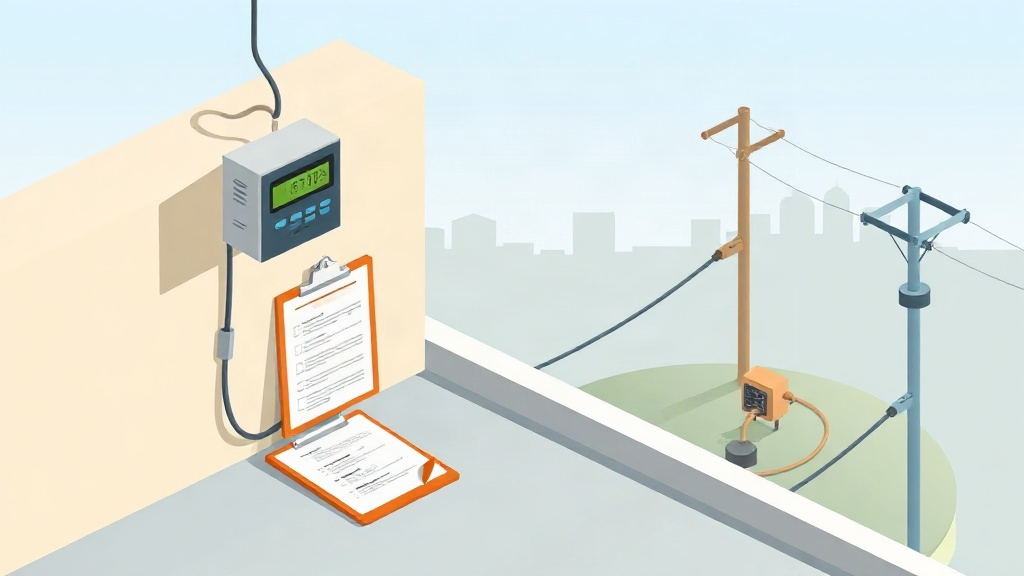
Quick Answer: A net metering application is submitted to your electricity distribution company (discom), usually through its online portal. You will typically need your consumer details, sanctioned load, proposed solar capacity, a single-line diagram, equipment specifications, and ownership or consent documents. After submission, the discom reviews the application, assesses technical feasibility, and issues approval. The process then moves to agreement signing, solar installation, inspection, bidirectional meter installation, and commissioning.
Applying for net metering involves more than filling out an online form. You need to check whether your proposed solar capacity is permitted against your sanctioned load, prepare the required technical documents, and follow up with your discom as the application moves through scrutiny and approval. This guide walks through each stage, from submitting the application and arranging the required paperwork to tracking its status, understanding technical inspections, and avoiding common reasons for delays. We also cover the process for industrial, commercial, and agricultural consumers in Gujarat.
What Is a Net Metering Connection?
A net metering connection allows a solar system to exchange electricity with the grid. A bidirectional meter records the electricity your solar plant exports to the distribution network and the electricity you draw from it. The applicable billing mechanism then accounts for these imports and exports according to the regulations in your state.
The meter replaces or supplements your existing service meter. Export units are adjusted against import units during the billing cycle, with settlement rules set by the state electricity regulatory commission.
For an industrial facility with a 500 kW rooftop solar installation, for example, net metering can help account for surplus daytime generation against electricity drawn from the grid when the solar plant is not generating. Our guide to net metering in Gujarat across UGVCL, DGVCL, PGVCL and MGVCL covers the discom-level differences in more detail.
How to Apply for Net Metering: Step-by-Step
The net metering application process generally follows six stages, although the application portal, documentation, capacity limits, fees, and approval requirements vary between states and discoms.
- Confirm your sanctioned load and the solar capacity permitted against it under your state regulations.
- Fill the net metering connection application form with consumer number, connection category, and proposed capacity.
- Attach the single-line diagram, equipment datasheets, and ownership or consent documents.
- Pay the application or registration charge fixed by your discom and keep the receipt.
- Receive technical feasibility approval, then sign the net metering agreement.
- Complete installation, pass inspection, and get the bidirectional meter fitted and commissioned.
Before filing, check your discom's latest application guidelines for applicable capacity limits, charges, and processing requirements. These can differ depending on the consumer category and state regulations.
Documents and Form Required
The net metering connection application form asks for consumer details that should match your electricity bill, including the consumer number, connection category, sanctioned load in kW or kVA, and meter number.
The documents generally requested include:
-
Latest electricity bill and payment details
-
Single-line diagram signed by a qualified electrical professional, as required by the discom
-
Technical datasheets for solar modules and inverters, along with applicable BIS or MNRE compliance documents
-
Proof of premises ownership, or a landlord no-objection certificate for leased sites
-
Identity proof and photograph of the applicant
-
Installer or EPC contractor details, where required
Expert Advice: Mismatch between the name on the electricity bill and the name on the application is the single most common cause of rejection at the scrutiny stage. Fix the bill name first, then file.
Submitting the Online Net Metering Application
Most discoms accept net metering applications through an online consumer portal. Applicants generally register using their consumer number, enter the proposed solar capacity, upload the required documents, and pay the applicable fee.
Upload scans as legible PDFs within the portal's size limit. After submission, the portal generates a reference or registration number used for every later stage, including meter testing and final commissioning.
Once the application is submitted, save the acknowledgement or registration number generated by the portal. You will generally need this reference when following up on document scrutiny, technical feasibility, meter installation, and commissioning.
Some discoms may also accept applications through their subdivision offices, depending on the consumer category and applicable procedure. Check the submission options available in your area before preparing a physical application.
Net Metering and Grid Connectivity Approval
After submission, the discom assesses whether the proposed solar installation can safely connect to the distribution network. This technical feasibility assessment considers factors such as the available capacity of the distribution transformer, existing solar connections on the feeder, proposed system capacity, and the protection requirements of the installation.
The discom's technical wing checks three things: the ratio of proposed solar capacity to your sanctioned load, the cumulative solar already connected on that distribution transformer, and the protection settings of your inverter.
If the proposed capacity cannot be accommodated, the discom may ask for a revised capacity or specify additional network requirements, depending on the applicable regulations and technical assessment. Once feasibility is approved, the consumer proceeds with the net metering agreement and installation as directed by the discom.
After installation, the system is inspected to verify that the electrical and safety requirements have been met. Checks may include earthing, isolation switches, anti-islanding protection, inverter settings, and required safety labels.
Final approval comes after a physical inspection by the electrical inspectorate and the discom, covering earthing, isolation switches, anti-islanding protection, and labelling.
Worth Knowing: Anti-islanding protection ensures that the solar inverter stops supplying electricity to the grid when the grid goes down. This is an important safety requirement. Make sure the inverter configuration and protection settings meet the applicable discom requirements before scheduling the inspection.
How to Track Your Net Metering Application
If your discom provides online application tracking, you can use the same portal to check the status of your submission. Depending on the portal, you may be able to search using your registration number, acknowledgement number, or consumer number.
Common application stages include submission, document scrutiny, technical feasibility assessment, approval, agreement signing, meter installation, and commissioning. The exact status labels and tracking options vary between discoms.
If an application remains at one stage longer than expected, contact the relevant subdivision office to check whether additional documents or clarifications are pending. Keep your registered mobile number and email address active so you don't miss application-related notifications.
Understanding Your Acknowledgement Number
The net metering application acknowledgement is the receipt generated after successful submission. It generally contains your application reference number and submission date.
Save a copy of the acknowledgement PDF and use the reference number in subsequent emails, portal queries, and visits to the subdivision office. It helps the discom locate your application and identify its current processing stage. Check the applicable processing timeline in your state's regulations or the discom's guidelines rather than assuming the same timeline applies everywhere.
Common Reasons Net Metering Applications Get Delayed or Rejected
An application can be delayed during document scrutiny or technical assessment if important details are missing, inconsistent, or do not meet the discom's requirements. Some issues worth checking before filing include:
| Issue | Where it appears | Fix before filing |
|---|---|---|
| Name mismatch with bill | Document Scrutiny | Confirm consumer details and submit any required authorization or name-change documents |
| Capacity above permitted load | Technical feasibility | Check sanctioned load and applicable capacity limits |
| Unsigned or incomplete SLD | Technical review | Get the single-line diagram prepared and signed by a qualified professional |
| Non-compliant modules or inverter | Technical review | Check applicable equipment standards and certification requirements |
| Pending electricity dues | Document Scrutiny | Clear outstanding dues if required under the discom's rules |
| Missing landlord NOC | Document Scrutiny | Obtain NOC for leased premises |
An EPC contractor handling the file prepares the single-line diagram, matches equipment to approved certification lists, and responds to discom queries before they age into delays.
Net Metering for Gujarat Industrial, Commercial, and Agricultural Consumers
Consumers in Gujarat apply through their respective electricity distribution companies. The broad application stages remain similar, but the applicable documentation, capacity requirements, and approval conditions depend on the consumer category and the discom serving the premises.
Raycal Power handles net metering approvals as part of its ground mounted and industrial rooftop solar EPC work, including application filing, feasibility coordination, and inspection support.
Consumers exploring subsidy-linked installations under PM Surya Ghar and KUSUM schemes should also check the relevant scheme requirements. These may involve separate portal registrations, eligibility conditions, and empanelled-vendor requirements alongside the applicable discom process.
To get your application scoped against your sanctioned load and discom, book a free solar assessment with Raycal Power.