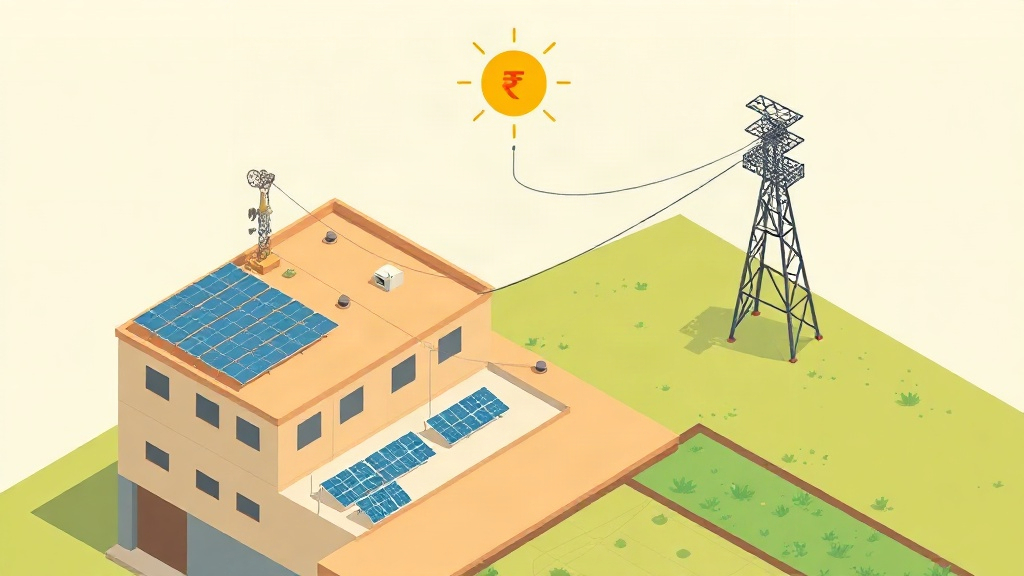
Quick Answer: Solar energy cost in India depends on system size, installation type, equipment, and site requirements. Indicative prices range from ₹45,000–₹70,000 for a 1 kW residential system to ₹3.5–₹4.5 crore for a 1 MW solar plant. Eligible residential rooftop and agricultural projects may qualify for government assistance under schemes such as PM Surya Ghar and PM-KUSUM. Your final cost depends on the project scope and applicable scheme.
Thinking about switching to solar? You might already be doing the math. How much will the installation cost? Is a 3 kW system enough for your home, or do you need 5 kW? And if you're installing solar at a factory, how do you estimate the cost before getting a quote?
The answer depends on more than the number of panels. A residential rooftop system has different requirements from an industrial installation or a solar plant built on open land. Even systems of the same capacity can cost different amounts depending on the equipment and installation work involved.
Let's break down indicative solar costs in India, what affects the final price, and how subsidies and net metering fit into the calculation.
What Solar Energy Costs in India Right Now
Solar power India cost is not one number. It splits into three distinct segments, each priced on different drivers.
A residential rooftop system is priced per kW of panel capacity plus inverter and mounting hardware. An industrial rooftop system adds structural reinforcement, higher-capacity inverters, and often SCADA monitoring. A ground-mounted plant adds land preparation, civil work, and evacuation infrastructure to connect to the grid.
Prices can vary significantly between residential and industrial solar projects because the system size, equipment, and installation requirements are different. Before comparing quotes, make sure you're comparing systems designed for similar needs.
Installation Cost Breakdown by System Size
Residential Solar Cost by kW
The cost of a home solar system depends on its capacity, your electricity consumption, and the available roof space. A 2 kW system may suit a household with modest daytime consumption, while larger systems can support homes with higher electricity needs.
A 3 kW system may suit a home with moderate electricity consumption, while a 5 kW system may be more appropriate for a larger household or one with higher daytime usage, including air conditioning.
| System Size | Indicative Cost |
|---|---|
| 1kw | ₹45,000–₹70,000 |
| 5kw | ₹2.25–₹3.25 lakh |
| 10kw | ₹4.5–₹6.5 lakh |
Industrial Rooftop and Ground-Mounted EPC Cost Drivers
Solar installation costs for industrial and ground-mounted projects depend on energy requirements, roof or land conditions, and grid-connection requirements. Panels are only one part of the total cost; structural work, cabling, and electrical infrastructure also contribute to the final price.
Industrial rooftop projects may require a structural assessment, particularly where an older factory roof needs reinforcement before panels can be installed.
| System Type | Typical Buyer | Key Cost Driver | Subsidy Route |
|---|---|---|---|
| 2-5kW Residential | Homeowners | Panel count, inverter size | PM Surya Ghar |
| 10-100kW Industrial Rooftop | Factories, warehouses | Roof condition, electrical infrastructure, monitoring | Depends on project and consumer eligibility |
| 500kW+ Ground-Mounted | Large industrial, institutional | Land, civil work, grid connection | Depends on consumer project eligibility |
| Agricultural Pump-Based | Farmers | Pump capacity, site and feeder requirements | PM KUSUM, subject to eligibility |
For a deeper look at utility-scale economics, see this 1 MW solar power plant cost breakdown.
Worth Knowing: Industrial rooftop quotes that bundle O&M and SCADA monitoring into the upfront EPC contract are usually easier to budget for than ones that quote them as separate annual add-ons later.
Subsidy-Adjusted Cost: PM Surya Ghar and KUSUM
Solar energy cost in India can change when an eligible project receives government assistance. However, PM Surya Ghar and PM-KUSUM cover different types of solar installations, so the applicable scheme depends on the consumer and project.
PM Surya Ghar supports eligible residential rooftop solar consumers, while PM-KUSUM covers specified agricultural solar applications. Eligibility and assistance depend on the scheme component and applicable requirements. Check the relevant official scheme portal before including a subsidy in your budget.
A few basics apply across both schemes:
- Subsidy timing depends on the scheme's application and approval process.
- Eligibility depends on the consumer category and the applicable scheme requirements.
- Metering and connection approvals may be required, depending on the installation.
- Scheme rules and assistance amounts should be checked against current official guidance.
Budget Insight: Confirm when and how the applicable subsidy is released before calculating your upfront payment and expected net cost.
Net Metering, Payback, and Selling Power Back
The payback period is the time it takes for a solar installation's financial benefits to recover its upfront cost. The calculation depends on installation cost, electricity savings, any applicable subsidy, and how surplus power is treated under the relevant billing arrangement. Net metering can affect the calculation, but it doesn't guarantee a shorter payback period.
Net metering may involve an application to the local DISCOM, meter installation, and any required inspection or approval before the system can export power. The specific process depends on the applicable utility requirements.
Because a site's consumption pattern and sanctioned load both affect how much surplus gets exported, payback period varies by site and should be calculated against actual monthly electricity bills rather than a generic industry figure. Tools like the Delhi Solar Rooftop Calculator illustrate how consumption and system size interact, though DISCOM rules differ by state.
Worth knowing: Net metering may involve an application to the local DISCOM, meter installation, and any required inspection or approval before the system can export power. The specific process depends on the applicable utility requirements.
What Drives Price Differences Between Quotes
Two quotes for the same system size can differ widely, and the gap usually comes from what's included, not just panel brand.
- Panel type and brand: efficiency ratings and warranty terms vary, affecting long-term output.
- EPC vs O&M bundling: a quote that excludes ongoing operations and maintenance will look cheaper upfront but shifts cost later.
- SCADA monitoring: real-time performance monitoring adds cost but catches underperformance early, which matters most for industrial and ground-mounted plants.
- Land requirement: ground-mounted plants need land area proportional to capacity, and land cost or lease terms directly affect total project cost.
Buyers comparing quotes should ask whether net metering approval, O&M, and monitoring are included in the EPC price or billed separately later.
Choosing an EPC Partner in Gujarat and Beyond
Selecting the right EPC partner matters as much as the cost table, since execution quality determines whether the projected payback actually materializes. Plant heads, operations directors, facility managers, and farm owners should evaluate a partner against a short checklist before signing:
- Does the EPC handle net metering approval directly, or leave it to the customer?
- Is O&M offered as part of the contract or as a separate renewal?
- Does the team offer SCADA monitoring for industrial or ground-mounted plants?
- Does the EPC have documented experience in your consumer category (residential, industrial, agricultural)?
- Is the service area a fit, given Gujarat-specific DISCOM rules and documentation requirements?
For context on commercial-scale projects, see our commercial solar cost and benefits guide. We serve industrial, commercial, and institutional consumers across Gujarat, including Amreli, Bhavnagar, Banaskantha, Surat, and Kalawad.
Request a free solar assessment through the Raycal Power contact page to get a size-by-size cost estimate tied to your actual consumption and subsidy eligibility.